EconomicsBecoming planetary
Advisory
Research
Published studies
United States–China: What Endgame?The Race to Strategic IncoercibilityDefying an Empire, Uniting a PeopleFaisal I, Lawrence of Arabia, and the Art of Turning Weakness into Power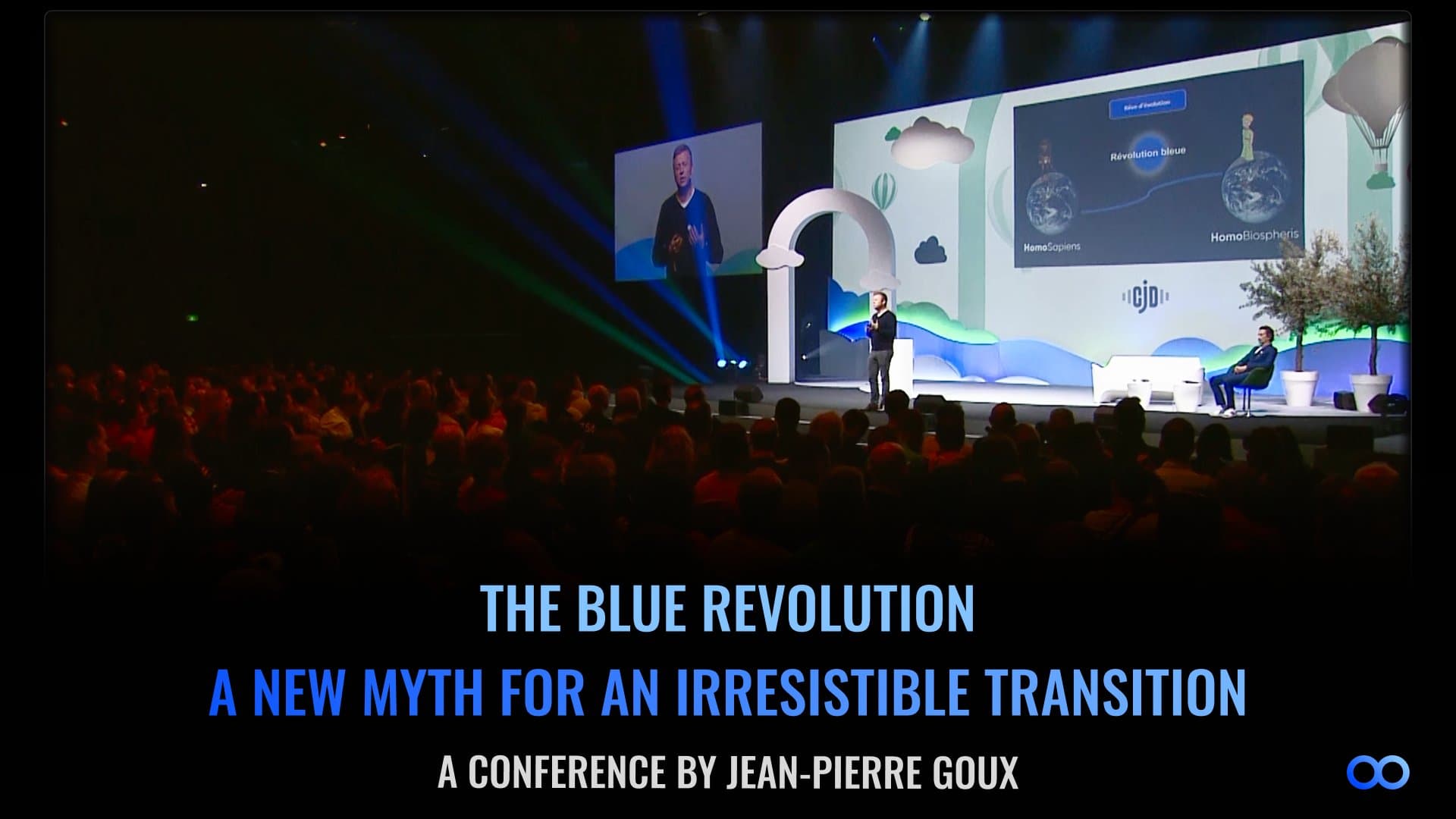
In a world where fear and division dominate, this conference offers an alternative and inspiring vision of the human phenomenon. It invites a rethinking of cooperation, mutual aid, collective action and inclusion, and above all a new way of seeing the economy: as the metabolism of humanity at the service of the Biosphere.
Particularly well suited to organizations that want to unite their teams around the ecological transition, it gives them the tools to rethink their model. Teams leave invigorated, with a drive to act and the conviction that the ecological transition can be irresistible rather than imposed.
Conference contentMyths coordinate the action of billions of humans. The one we currently live by is no longer adequate: it is destroying humanity and the biosphere. After an introduction on the role of myths and the psychology of change, we travel back to the Big Bang to tell a different story of the Universe, the Earth and humanity.
We set out together to discover Homo Biospheris, the successor to Homo Sapiens whose secret was kept for 80 years on the cover of The Little Prince by Antoine de Saint-Exupéry, until Jean-Pierre Goux uncovered it. We then explore how this new myth makes the ecological transition irresistible, through a process of metamorphosis called the Blue Revolution, and how it radically changes the interactions between humans and their place within the Biosphere.
This conference proposes a radical reframing: the economy as the metabolism of humanity at the service of the biosphere, and the ecological transition as a metamorphosis of that metabolism. Organizations are invited to see themselves as organelles of a larger body called humanity, itself held within a greater body called the Biosphere.
- A new collective narrative that gives teams a fundamentally different understanding of their organization's role in the living world
- The concept of Homo Biospheris as a powerful reframing of human identity and the meaning of human life
- The economy as metabolism, a fresh and generative lens for rethinking business models and cooperation logic
- A framework to rethink inclusion, collaboration and collective intelligence within the organization
- A conceptual foundation for reimagining the business model in relationship to the Biosphere
30 to 60 minutes, depending on your needs and context.
AudienceAll-company events, leadership offsites, executive committees, organizations wanting to rethink their strategic narrative and their relationship to the ecological transition.
Interested in this keynote?
Each keynote is tailored to your context, audience and goals.