Manifesto · Becoming Planetary
Cancer or organ?
The choice facing humanity in the planetary age
What biology can teach us
A biological framework for a civilisational question
The Biosphere already has organs. Forests, oceans, mycorrhizae, soils: each regulates something in service of the whole, over millions of years, with no institution to direct it. Humanity is the only tissue whose collective behaviour can be oriented by a narrative.
An organ fulfills defined functions. A tumour proliferates without fulfilling any.
The human body is a system of interdependent organs. Each organ has precise functions, regulates its own growth, and contributes to the health of the whole. The liver performs 15 measurable functions: filtration, protein synthesis, glycogen storage. The lungs exchange gases. The heart distributes nutrients. None grow without limit. When a cell escapes this regulation, it becomes a tumour: it consumes shared resources without returning anything, and ends by destroying the body that carries it.
James Lovelock named this science geophysiology. It invites us to read the Biosphere as a system of interdependent functions. The analogy with the organs of the human body is not literal, but it illuminates a central question: what is a species for within the functioning of the living whole? We can then look at certain great living systems as planetary functions. These examples do not reduce the Biosphere to a human body; they show how certain vital functions already exist at the scale of the Earth.
Planetary nervous system
Mycorrhizae connect thousands of trees through underground networks. They redistribute nutrients, signal pest attacks, and coordinate carbon flows across hundreds of kilometres.
Planetary heart and circulation
Major currents (Gulf Stream, ENSO) distribute heat, oxygen and nutrients across the globe. Salmon swim upstream and fertilize forests with their decomposing bodies.
Planetary lungs
The Amazon produces 20% of terrestrial oxygen. Ocean phytoplankton produces 50%. Together they have regulated atmospheric CO₂ for 3 billion years.
Planetary liver
Peat bogs store twice as much carbon as all forests combined. Soil bacteria decompose, filter and continuously recycle organic matter.
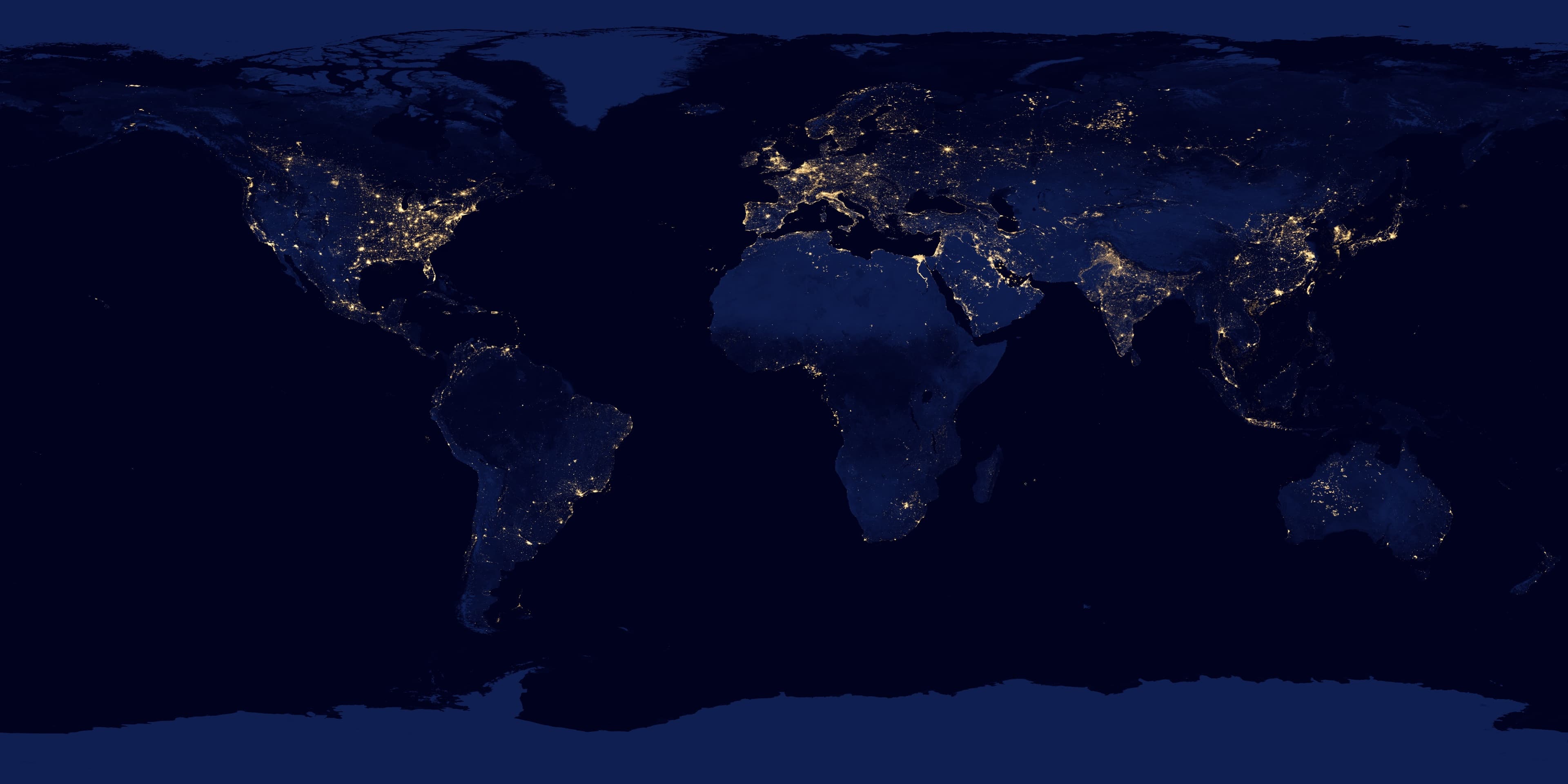
Humanity is the first species to act at the scale of the entire Biosphere. Through its technical, demographic and economic power, it already acts at the scale of the great planetary functions. The question is whether this power becomes a function, or a disruption that could cause our end.
Cancer behaviour
Growth without limit
No internal regulation. The tumour mass expands until the host system collapses.
Consumption of the host
Draws on shared resources without contributing to vital functions. Degrades the other organs.
No defined function
Proliferates but serves nothing in the organism. Its only project is its own expansion.
Common end
When the host dies, the tumour dies with it. Cancer destroys the conditions of its own survival.
Organ behaviour
Precise functions
Each organ fulfills a defined role in the body. The liver: 15 measurable functions. The lungs: gas exchange. None proliferates endlessly.
Internal regulation
The size of each organ is regulated by the whole body. A cell that proliferates without limit triggers an immune response.
Contribution to the whole
The organ draws resources from the body and returns them transformed. Its health depends on the health of the entire body.
Shared durability
When the body prospers, its organs prosper. Health is interdependent at every level.
Current behaviour
7 / 9
Planetary boundaries exceeded. Humanity's footprint exceeds the Biosphere's regenerative capacity on 7 of the 9 measured processes.
What is missing
A defined function
Gaia's organs each fulfill a precise role. Humanity is the only species without an assigned function in the planetary system.
The way out
Homo biospheris
Defining functions in service of the Biosphere. Regulating its own growth. Moving from tumour behaviour to organ behaviour. The ten missions are that content.
Synthesis
The question of the planetary age in biological terms
The Biosphere structured its species into organs over 3.8 billion years. Each organ has its functions, its regulation, its contribution to the whole. Humanity has acquired the size of a planetary organ. It does not yet have the functions. Homo biospheris is the name of humanity that gives itself those functions.
A production of the Planetary Lab
© 2026 Biosphere Economics · CC BY-NC-ND 4.0
Into action
The Biosphere already has organs, and your organization can evolve toward a functional organ in service of the whole. These two formats help think through that shift.
Keynote conference
The Blue Revolution
A galvanizing story for transition at a global scale. To anchor change in your organization.
30 to 90 min · executive committees, corporate events
See all conferencesStrategic seminar
Leading the Transition Through Adversity
Sharpening clarity and drive in transition leaders. To stay the course through complexity.
1 to 2 days · executive teams, leadership committees
See all seminars