EconomicsBecoming planetary
Advisory
Research
Published studies
United States–China: What Endgame?The Race to Strategic IncoercibilityDefying an Empire, Uniting a PeopleFaisal I, Lawrence of Arabia, and the Art of Turning Weakness into PowerUnderstand the system, even before strategy or transition.
The
Biosphere
A thin film between the deep ocean and the lower atmosphere, twenty kilometers thick. Everything that has ever lived fits inside it.
It represents just one billionth of the Earth's weight. The weight of a veil of silk draped over a body, fragile but untearable, until now.
01 · Naming the invisible
Nature, environment,
climate, biodiversity.
None of them names the Whole.
Each of these words gestures at a piece of something. None of them names the Whole. None of them refers to a single, integrated living system that has been operating for nearly four billion years. Before any strategy or transition plan, we need to identify the system inside which our reality operates.
The Biosphere is that system: the totality of living matter and the environment it has shaped into a single self-regulating whole. Eduard Suess coined the term in 1875. Vernadsky established its scientific foundations in 1926.
02 · The real invisible hand
Regulation without
a center
No single discipline covers the Biosphere on its own. Biology explains the oxygen cycle, hydrology the water cycle, geophysics the magnetosphere. Each science describes a fragment of the same whole. Their interaction produces something none of them predicts alone.
03 · Living system or organism?
Lovelock, Margulis,
and the Gaia Hypothesis
In the 1970s, two scientists publish a theory the scientific community receives with deep skepticism: The Gaia Hypothesis. The Earth functions as a superorganism, capable of regulating its temperature, atmospheric composition, and ocean chemistry over geological timescales. Lovelock calls it geophysiology.
Over 3.8 billion years, even as the Sun grew far more luminous, the Earth remained habitable. This long-term stability fed Lovelock's intuition: that life participates in regulating the conditions for habitability.
Evolution is a tightly coupled dance, with life and the material environment as partners. From the dance emerges the entity Gaia.

James Lovelock
Gaia Hypothesis, 1973
Life did not take over the globe by combat, but by networking.
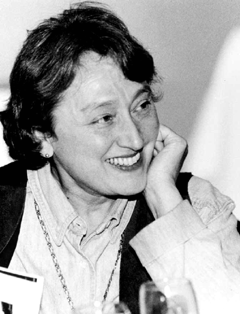
Lynn Margulis
Co-author of the Gaia Hypothesis
04 · A new kind of science
Biosphere 2
A science ahead of its time
In the late 1980s, John Allen and a group of scientists and architects built an unprecedented sealed glass structure in the Arizona desert, enclosing a miniature replica of Earth's major ecosystems. The ambition of Biosphere 2 was to understand the integrated functioning of the planetary system, its equilibria, its flows and its points of fragility, by studying it as a whole and by studying its interactions with eight human beings.
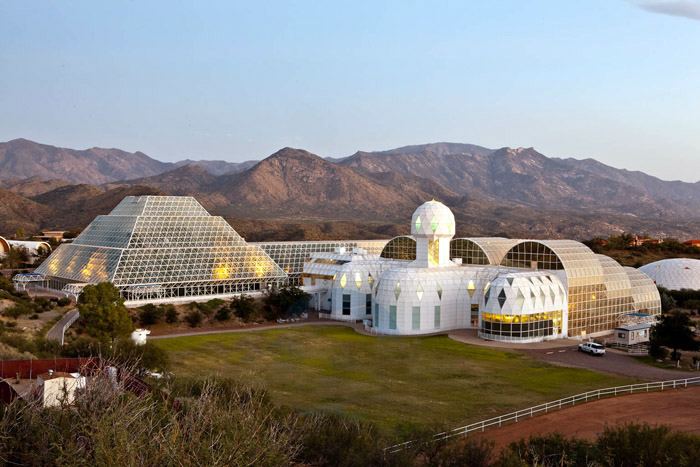
Biosphere 2, Oracle, Arizona
There is nothing radically new in any one of the individual things we have done. What has been extraordinary is to do all of these things, all at once.
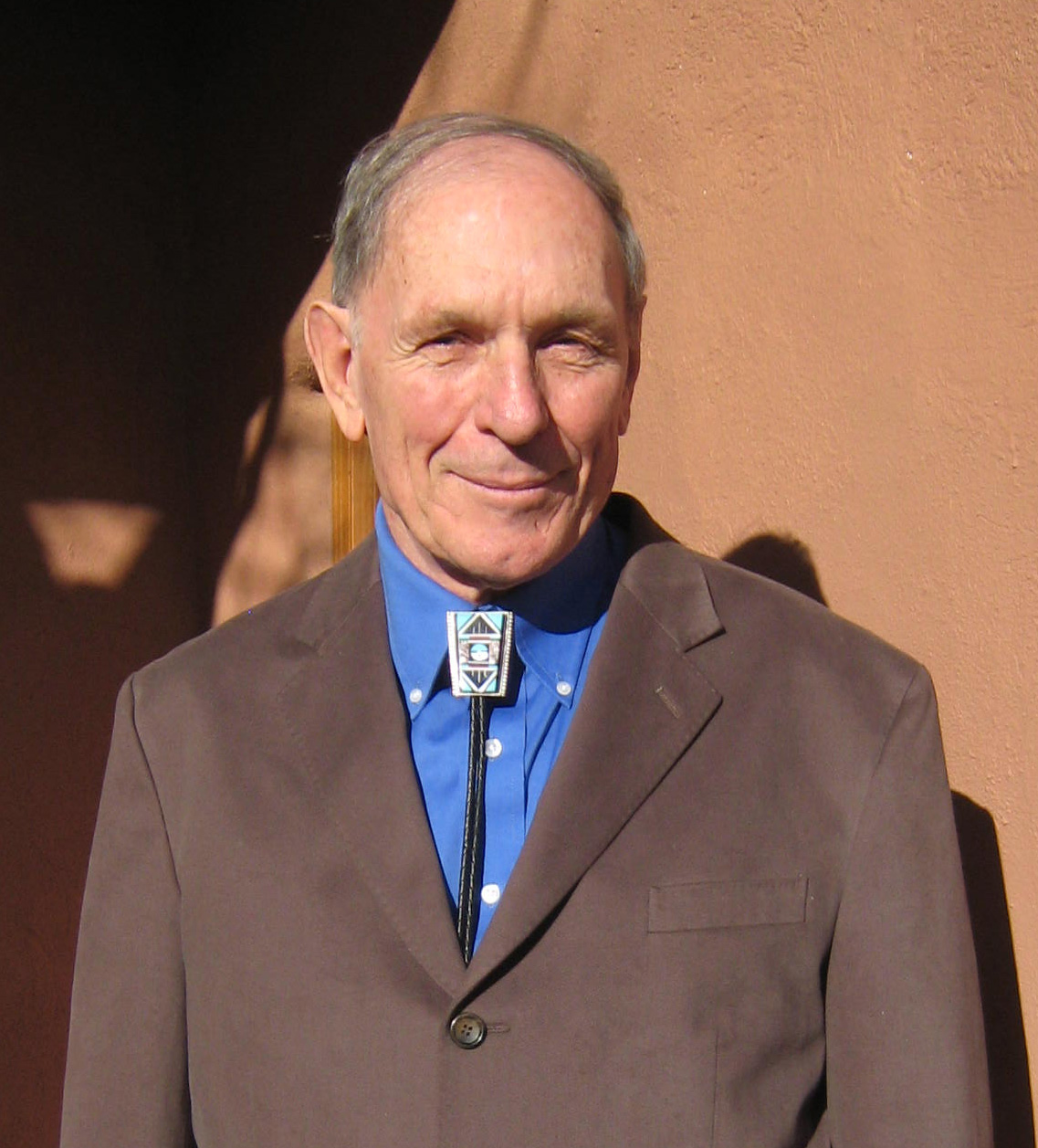
John Allen
Biosphere 2, Oracle, Arizona
Seven ecosystems sealed inside one structure:
- Tropical rainforest
- Ocean and coral reef
- Mangrove wetlands
- Savanna grassland
- Fog desert
- Agricultural zone
- Human habitat and laboratories
For Lovelock
Geophysiology: the study of Earth as a living physiological system, with organs, flows, and feedback loops.
For Allen
Biospheric sciences: the integrated study of the planetary system as a whole, where disciplines converge.
05 · The Proof
December 7, 1972
Blue Marble
On that day, the Apollo 17 crew photographed the entire Earth, fully lit, for the first time in human history. In 4.6 billion years, the living organism that is Earth saw itself for the first time. The image would be called Blue Marble.
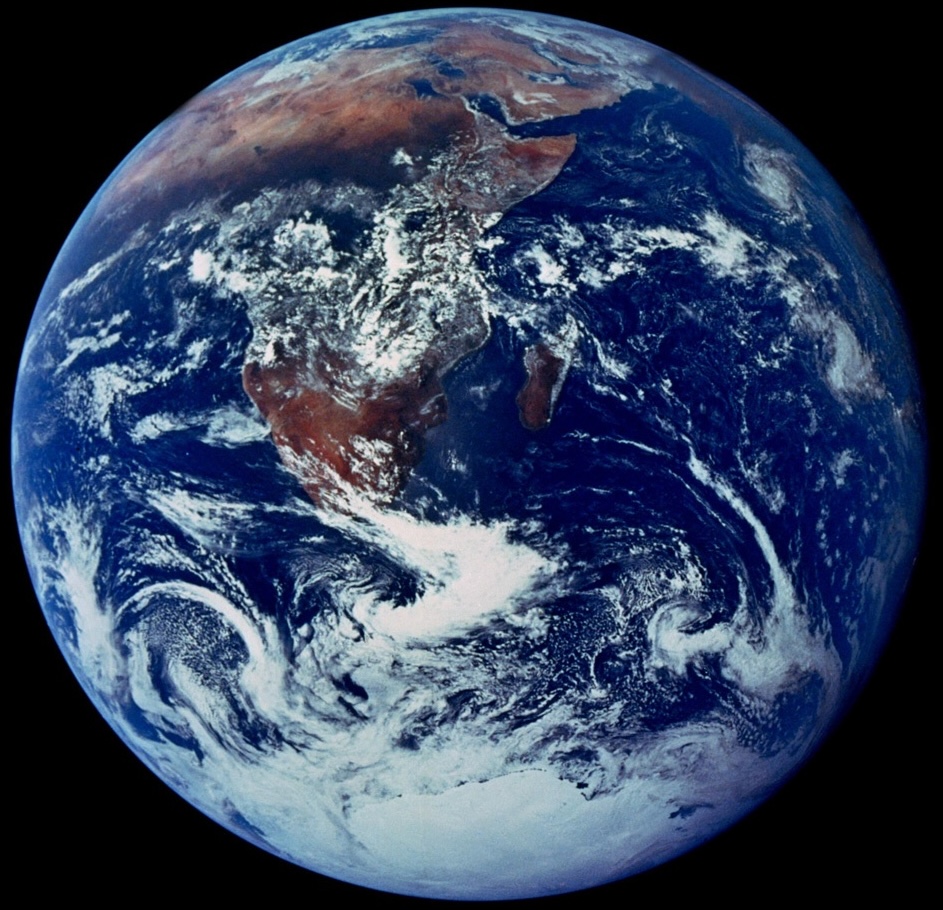
1972 was a pivotal year. The Meadows Report warned the world about the limits of growth, and the first UN Conference on the Environment brought together 113 nations in Stockholm. The photograph served as a shared mental reference, an image of what we risked losing. Billions of years after its formation, one species finally recognized the existence of Gaia. At the very moment it was threatening the balance it depends on.
06 · Where does humanity fit in?
Cancer.
Or organ?
Within a few centuries, one species has become a force at planetary scale, capable of disrupting the equilibria the Biosphere has maintained for billions of years. Biology has a name for organisms that destabilize the systems they depend on.
In , Jean-Pierre Goux explored another hypothesis in depth. Homo Sapiens could make the step toward Homo Biospheris: a humanity that recognizes the living system it belongs to, and makes it the foundation of all its decisions.
This scenario remains marginal. It may be the only one equal to what the planetary age demands. Biosphere Economics works to make it real, one organization at a time.
A production of the Planetary Lab
© 2026 Biosphere Economics · CC BY-NC-ND 4.0
The next step
Becoming an organ
of Gaia
The concept of Homo biospheris: humanity as a planetary collective, conscious of its role within the living world.
Explore Homo biospheris →OUR NEWSLETTER
Stay informed every quarter about our activities and research.